

Highly Sensitive Triboelectric Strain Sensors Utilizing CNT/PDMS Nanocomposites for Joint Motion Monitoring
Student Researcher
Arye Miranda
Stevens Institute of Technology
Faculty Advisor
Dr. Eui-Hyeok Yang
Department of Mechanical Engineering
Stevens Institute of Technology
Why This Research Matters
Wearable sensing technologies have the potential to transform how movement and physical activity are monitored. Highly sensitive strain sensors can provide real-time feedback on joint motion, muscle activity, and body mechanics, creating new opportunities for healthcare providers, athletes, and researchers.
Carbon nanotubes are particularly promising materials because of their exceptional strength, flexibility, and electrical conductivity. By incorporating these nanomaterials into flexible wearable devices, researchers can improve sensor sensitivity while maintaining comfort and durability.
The successful development of these sensors could support future advancements in sports medicine, injury prevention, rehabilitation, physical therapy, and wearable health monitoring technologies.
Project Overview
Flexible wearable strain sensors are becoming increasingly important in healthcare, sports medicine, rehabilitation, and human motion monitoring. These devices allow researchers and medical professionals to collect real-time movement data that can be used to improve injury prevention, physical therapy outcomes, and overall patient care.
Through support from a STEMNetX Research Grant, Arye Miranda is conducting research under the mentorship of Dr. Eui-Hyeok Yang to develop a highly sensitive wearable strain sensor utilizing carbon nanotube (CNT) nanocomposites. By combining the exceptional electrical and mechanical properties of carbon nanotubes with flexible polymer materials, the project aims to create a low-cost, highly responsive sensor capable of converting human motion into measurable electrical signals.
This research explores how advanced nanomaterials can be applied to next-generation wearable technologies with applications in both medicine and engineering.
Research Goals
The objectives of this project include:
Synthesizing vertically aligned carbon nanotubes (VACNTs) using Atmospheric Pressure Chemical Vapor Deposition (APCVD).
Characterizing the structure and morphology of carbon nanotubes using Scanning Electron Microscopy (SEM).
Fabricating a flexible CNT/PDMS nanocomposite sensor.
Evaluating sensor performance under bending and stretching conditions.
Using Raman spectroscopy to assess the structural quality of carbon nanotubes before and after device fabrication.
Meet the Research Team
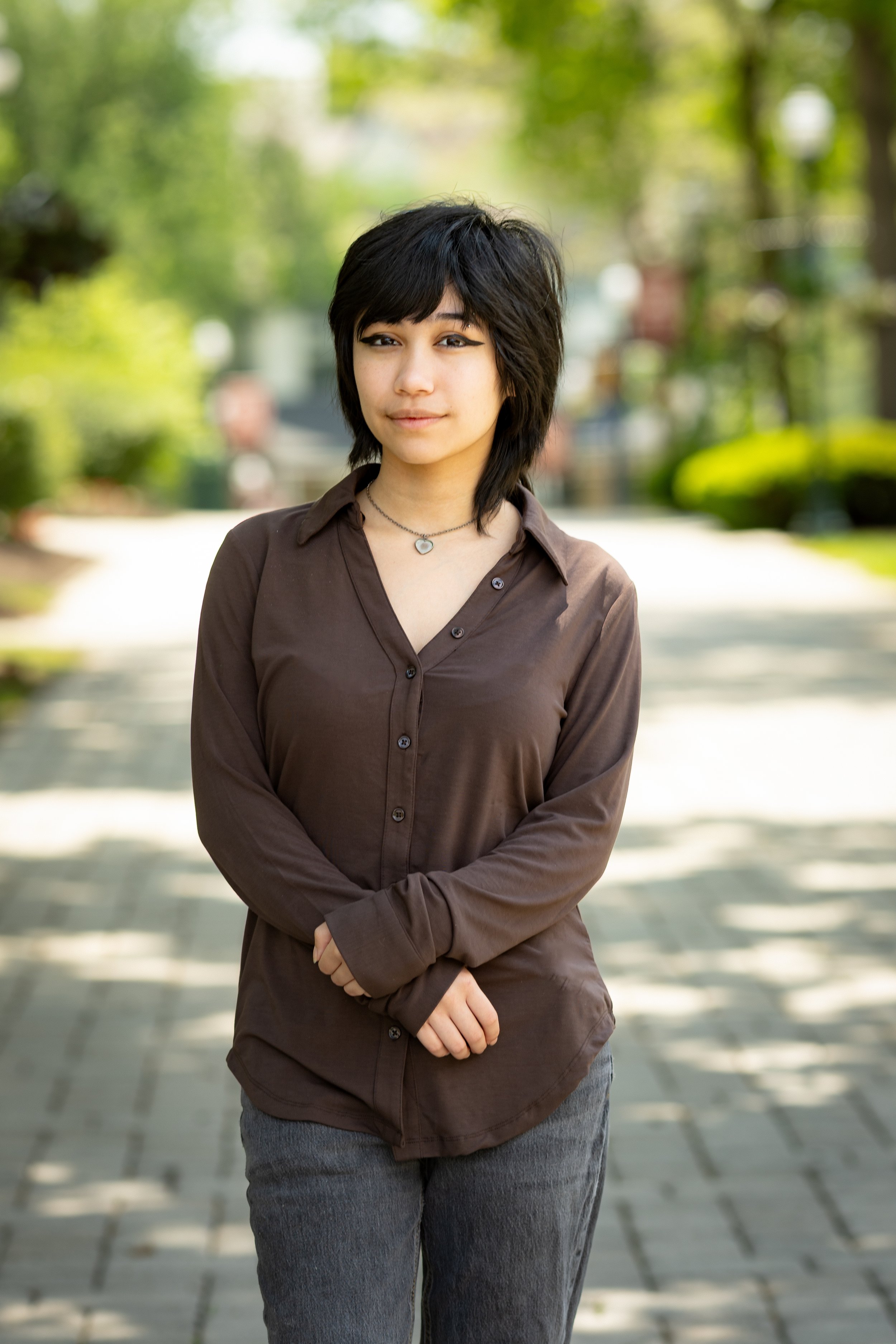
Arye Miranda
Hi, I'm Arye Miranda (they/them)!I am an undergraduate researcher pursuing a major in Mechanical Engineering with a minor in Physics at Stevens Institute of Technology, fascinated by smaller scale phenomena and mechanical design. In high school, I became deeply interested in quantum technology and found myself reading research papers. Because of this, I applied to college in hopes of pursuing research to develop sensors leveraging quantum mechanical properties. I've found passion and community in research. Initially I had never considered a PhD as I was never exposed to what it entailed, but I now hope to pursue one after being encouraged by professors and fascinated with experimental research. StemNetX offered a specific focus in Quantum Technology often not seen in other fellowships that I hope to enrichen my passion through. Since my freshman year, I have been involved in a lab that aims to study unique quantum properties in 2D materials and its application in nanoscale devices. My current work involves TMD material synthesis and graphene based Extraordinary Magnetoresistance (EMR) for applications in ultrasensitive rotation sensors. However, in the future, I would like to develop my own sensors with a deep interest in flexible nanoscale electromechanical sensors (NEMs).
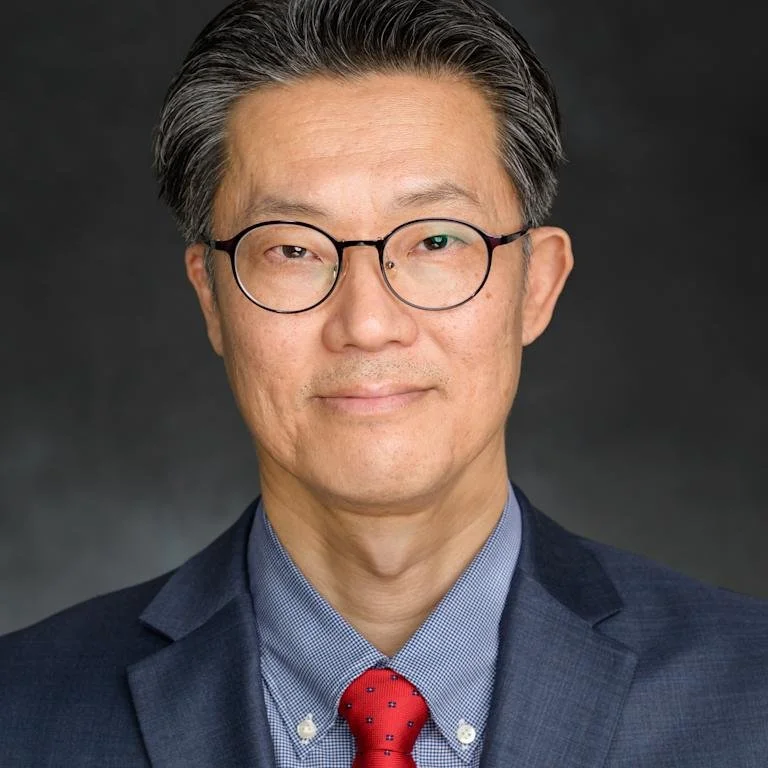
Dr. Eui-Hyeok Yang
Dr. E. H. Yang is a Professor of the Mechanical Engineering Department at Stevens Institute of Technology. He worked as a Senior Member of the Engineering Staff at NASA's Jet Propulsion Laboratory. Dr. Yang led several projects funded by NASA, DARPA, and NRO before joining Stevens in 2006. He secured over forty federal grants and contracts, including funding from the NSF, AFOSR, and the US Army. Among other honors, he was awarded the Lew Allen Award for Excellence at NASA/JPL in 2003, the Award for Research Excellence at Stevens in 2019 and the IEEE Technical Achievement Award (Advanced Career) from the IEEE Sensors Council in 2020. He is a Distinguished Lecturer of the IEEE Nanotechnology Council as well as the Sensors Council. Dr. Yang is Editor-in-Chief of the IEEE Sensors Reviews and Chair of the IEEE Nanotechnology Council North Jersey Chapter. Dr. Yang is a Fellow of the National Academy of Inventors. In 2023, he was awarded the Master of Engineering, Honoris Causa, from Stevens Institute of Technology.
STEMNetX Impact
The STEMNetX Research Grant program supports undergraduate students and faculty mentors as they pursue innovative STEM research with meaningful real-world applications. Through this project, Arye Miranda is developing valuable skills in nanomaterials synthesis, microscopy, spectroscopy, device fabrication, and scientific communication.

We are proud to support Arye Miranda and Dr. Eui-Hyeok Yang as they advance research that contributes to the future of wearable technology, biomedical monitoring, and nanotechnology innovation.